Land Clearing for Farming and Pasture in Clarksville, TN
Wooded and overgrown ground put back into hay, pasture and row crop, with the roots dealt with so the field can take a bush hog.
Get a Free Land Clearing Quote in Clarksville
Tell us the acreage, the road it fronts and what the ground has to do afterwards. Form requests are answered the same working day, and every quote follows a site walk.
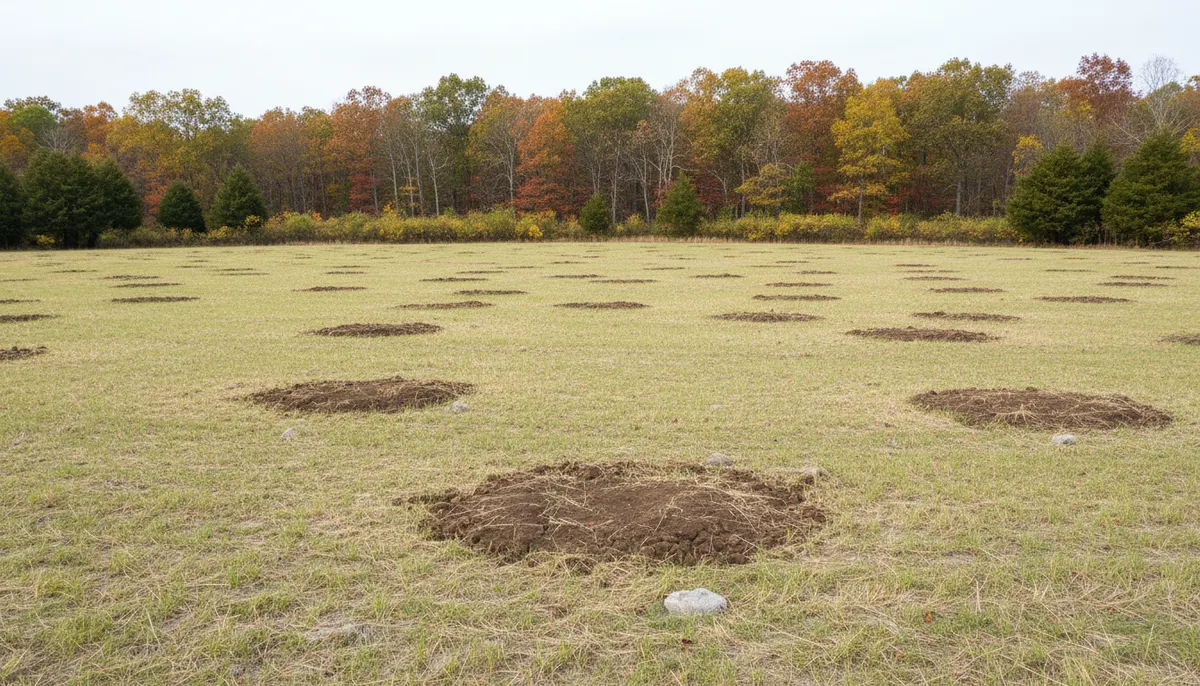
Land clearing for farming in Clarksville, TN is judged on what the ground has to do afterwards, and a field is a harder target than a building pad. A pad only has to be flat. A field has to be mown, driven, seeded and grazed, so every root crown the clearing leaves behind becomes a machinery problem.
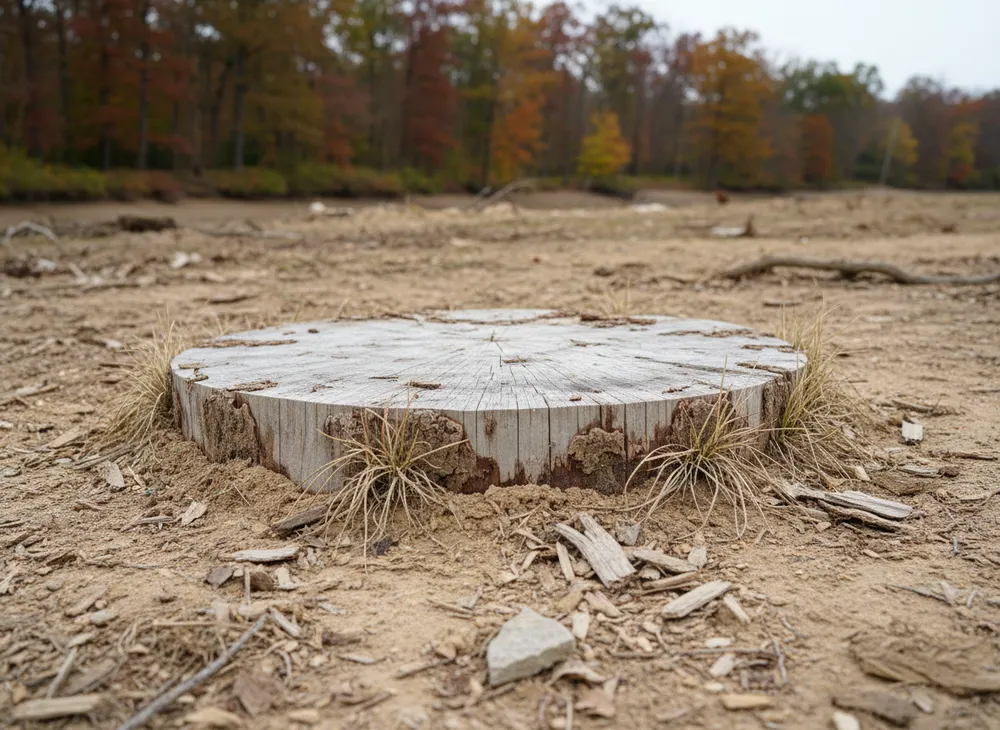
Ground We Put Back Into Production
Reclaiming grown-up pasture
Fields that stopped being mown and filled with red maple, sweetgum and cedar.
Clearing land for horse pasture
A stricter standard than cattle ground. Stobs, root crowns and old wire have to go.
Wooded acreage to hay
Canopy, stumps and root mat out, so a cutter crosses without lifting.
Field edges and hedge rows
Corridor work recovering the acreage a hedge row took.
The Ground You Are Clearing Onto
Pembroke silt loam
Well drained with moderate permeability, historically cleared here for corn, small grains, tobacco, hay and pasture. Where the map shows Pembroke you are restoring a field.
The Dickson fragipan
Dickson soils carry a dense restrictive layer that perches water, which is why a field carries a machine in July and ruts in March.
Rainfall and the working window
The county takes 50.99 inches a year, 14.60 across March, April and May against 6.44 across August and September.
Getting a Field Back, Step by Step
-
Set the finish standard
Hay, grazing or row crop, since each tolerates different residual root.
-
Take the standing vegetation
Mulching where stems are small, felling where they are not.
-
Grub what the mower will hit
Crowns removed rather than cut flush, holes backfilled.
-
Grade, seed and stabilise
Surface smoothed, seed in, cover established.
Why Mulching Alone Rarely Produces a Field
Cut stems come back, and root crowns eat equipment
Forestry mulching grinds standing vegetation in place and leaves it as a mulch layer. It is fast, needs one machine, and removes the haul-off line entirely. What it does not do is remove roots. Red maple, sweetgum, hackberry, blackberry and eastern red cedar all re-sprout from a cut crown, so a mulched field left alone returns thicker than it was, because every stump now sends up several stems instead of one. The second problem is mechanical. A ground-off crown sits an inch or two proud of the soil and hardens, which is exactly the height a rotary cutter deck rides at. For grazing and hay the honest sequence is mulch first to see the ground, grub the crowns that matter, then grade. Mulching plus a follow-up rotary cutting programme is defensible where budget is tight, but it is a maintenance commitment rather than a finished field.
The rules that apply to agricultural clearing here
Soil disturbance greater than one acre in Montgomery County follows the county Stormwater Program under Resolution #13-2-2, with Grading, Drainage and Erosion Control plans submitted before earth disturbing activity begins. State coverage under the Tennessee Construction General Permit, TNR100000, is triggered by clearing, grading or excavation disturbing one or more acres, with the notice of intent filed at least 30 days ahead. Where a blue-line stream crosses the field, a 30-foot riparian buffer is preserved to the maximum extent practicable and never narrows below 15 feet at any measured point. Bare ground takes stabilisation within two weeks of activity ceasing, and within one week on steep slopes.
Pasture and Cropland Clearing Prices
$975 to $3,250 per acre by density, with grubbing quoted separately at $2,600 to $4,160 per acre
Tennessee ranges from a 2026 cost guide, quoted after a field walk.
| Scope | Typical range | What it covers |
|---|---|---|
| Light brush and grass | $975 to $1,560 per acre | Ground not yet woody. |
| Medium brush and small trees | $1,430 to $2,210 per acre | Commonest on a field left ten years. |
| Heavy forest and large trees | $2,080 to $3,250 per acre | Mature canopy out for pasture. |
| Grubbing, stumps and root mat | $2,600 to $4,160 per acre | What separates a real field from a mulched one. |
| Forestry mulching | $1,105 to $1,950 per acre | No disposal line, and no root removal. |
What moves the price
- Stem density, which drives a three to eight times spread.
- Stems over 6 inches, which add 15 to 30 percent.
- Moderate slopes add 20 to 30 percent, steep or rocky ground 40 to 60.
- Rock and hidden debris add 20 to 40 percent.
- Jobs of 5 acres and up carry a 10 to 25 percent discount.
A worked example. Six acres of medium brush going back to hay. Clearing at $1,430 to $2,210 per acre is $8,580 to $13,260 before the size discount. Grubbing only the two acres that get cut adds $5,200 to $8,320.
What We Do Differently on Farm Ground
The finish standard is agreed in writing
Hay ground and horse pasture are different jobs. The quote names which.
Topsoil stays on the field
Blade work that scrapes topsoil into the pile costs a decade of production.
Grubbing is scoped by area
Root removal is the expensive line, so it covers only where machinery runs.
Farm Clearing Questions
Will mulched ground grow grass, or does it need topsoil?
It will, but not at once. A thick mulch layer ties up nitrogen as it breaks down, so a field seeded into deep chip comes in patchy for a season. Spread it thin or rake it off the seeded areas.
How deep do stumps have to come out for pasture?
Far enough that a cutter deck and a tyre never find them, which means the crown and upper lateral roots come out rather than the stump being ground level. Grinding leaves the root system in place, acceptable under grazing but not under hay cut low every year.
Can I clear right up to the creek?
No. Under the Tennessee Construction General Permit a 30-foot riparian buffer is preserved between the waterbody and the disturbed area to the maximum extent practicable, and never less than 15 feet at any measured point.
When is the best time of year to clear a field here?
Late summer and early autumn for soil work. August and September take 6.44 inches of rain against 14.60 across March, April and May, and fragipan soils carry machinery badly in spring.
Do I need a permit to clear my own farm ground?
Above one acre of soil disturbance, county and state stormwater requirements apply whoever owns the ground: Grading, Drainage and Erosion Control plans locally, and a notice of intent 30 days ahead.
The Work Either Side of a Field Job
Keeping the field down once it is open is the cheap half of this, and stops a field reverting inside three seasons.
Grinding standing brush in place is the fastest way to see what you own before deciding how much to grub.
Smoothing the surface after the roots come out turns a cleared area into ground a cutter can cross.
Book a Site Walk on Your Acreage
Send the parcel details and we will walk the ground, measure the disturbed area, check the stormwater threshold and put a written scope in front of you before any machine is booked.