Clarksville Elite Land Clearing: Forestry Mulching and Lot Clearing in Clarksville, TN
Tracked mulchers, grubbing and grading for wooded acreage and build pads across Montgomery County, with the one-acre stormwater threshold checked before the first pass.
Get a Free Land Clearing Quote in Clarksville
Tell us the acreage, the road it fronts and what the ground has to do afterwards. Form requests are answered the same working day, and every quote follows a site walk.
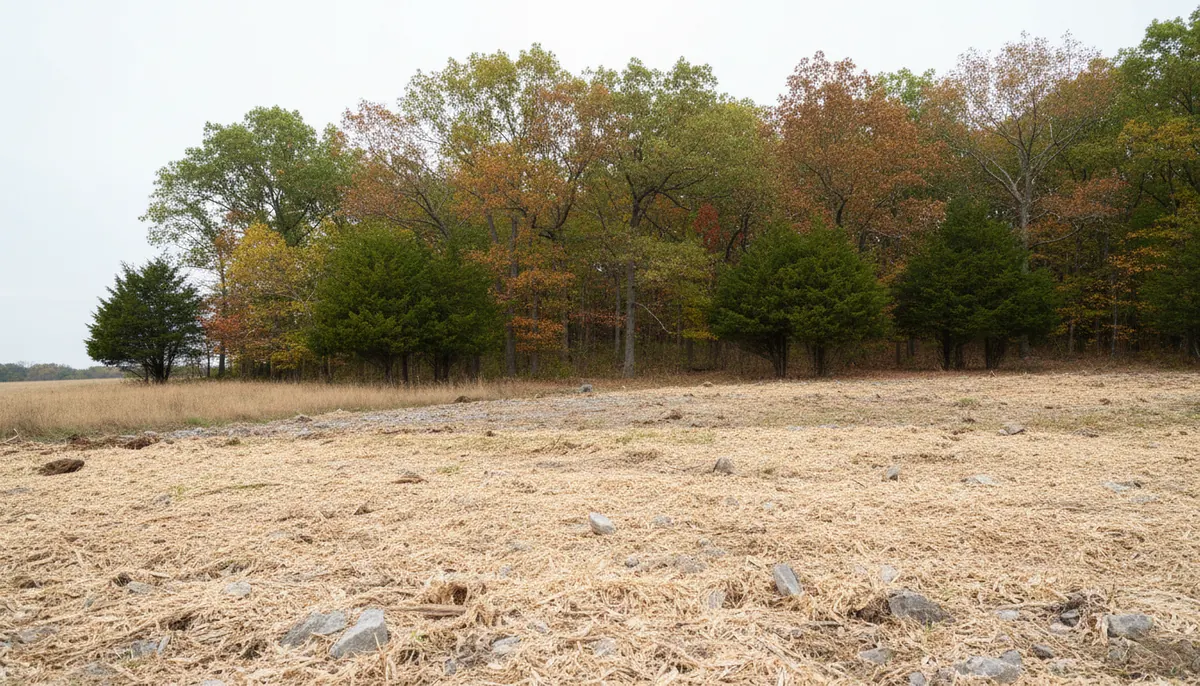
Land clearing in Clarksville, TN runs from one overgrown residential lot to a hundred acres of standing hardwood, and the method changes with what the ground has to do afterwards. Clarksville Elite Land Clearing provides forestry mulching, lot clearing, grubbing, stump grinding, grading and site preparation for landowners, builders and developers across Clarksville and sixteen surrounding communities in Tennessee and southern Kentucky. Montgomery County is 539 square miles of land at 408 people per square mile, so a quarter-million metro sits inside a county that stays rural outside the city boundary.
What drives the price is whether the roots stay or go. Mulching grinds vegetation in place and leaves it as cover, which is fast and wrong under a footing. Grubbing pulls the root mat out, and it is the only answer where a slab, a septic field or a pond is going. Clearing to build starts with what a builder needs before a footing. Clearing to use the land again is usually one mulching pass.
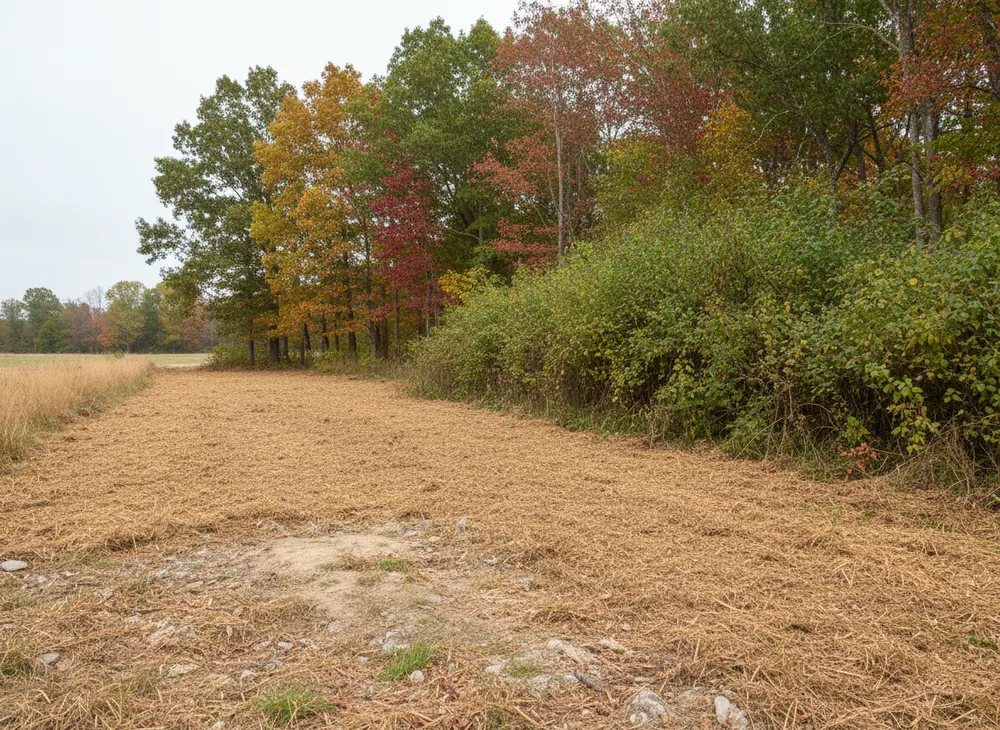
Our Land Clearing Services in Clarksville, TN
Six core scopes, quoted separately, so you buy the one the parcel needs rather than a package built around the biggest machine.
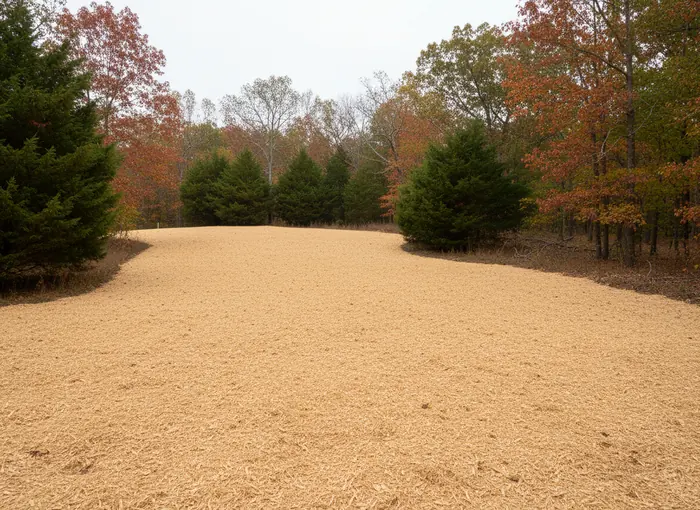
Forestry Mulching
One machine grinds standing brush, saplings and small trees where they stand and leaves the material as a mulch layer. No pile, no burn, no haul-off line item, and the mulch holds soil through the next rain. The right call for reclaiming overgrown pasture, opening sight lines and cutting trails. It does not remove roots or stumps.
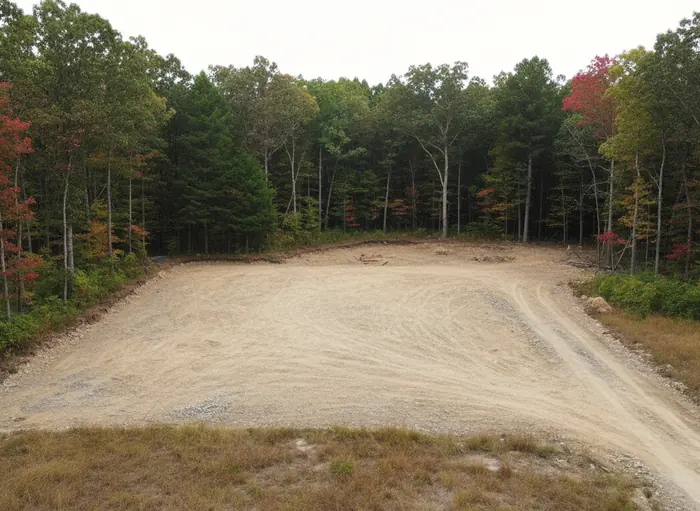
Lot Clearing
Clearing a residential or rural parcel to a usable state, from a quarter-acre infill lot to a five-acre tract on the rural fringe. Larger parcels are priced per acre by density. Small suburban lots are priced per job, because on a tenth of an acre the mobilisation costs more than the cutting. Locates go in before ground is broken.
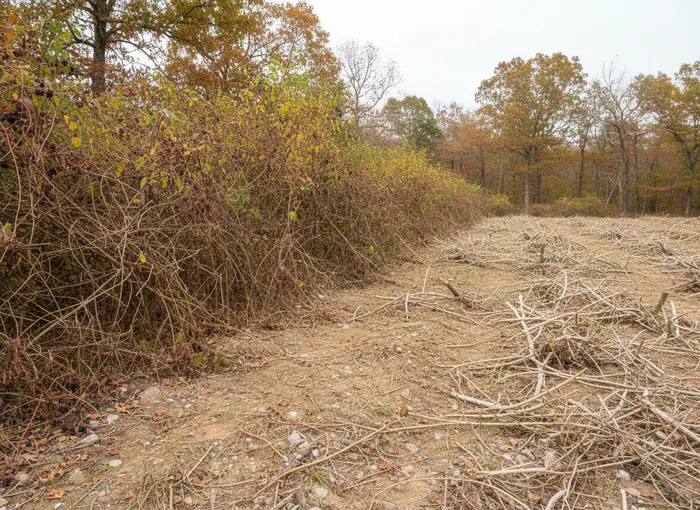
Brush Clearing
Removing understory, briar, honeysuckle and volunteer saplings from ground left alone for a few seasons. The trade prices this in density classes, and the class sets the production rate more than anything else on the site. Regrowth is the real question, and the honest answer is a maintenance interval rather than a promise.
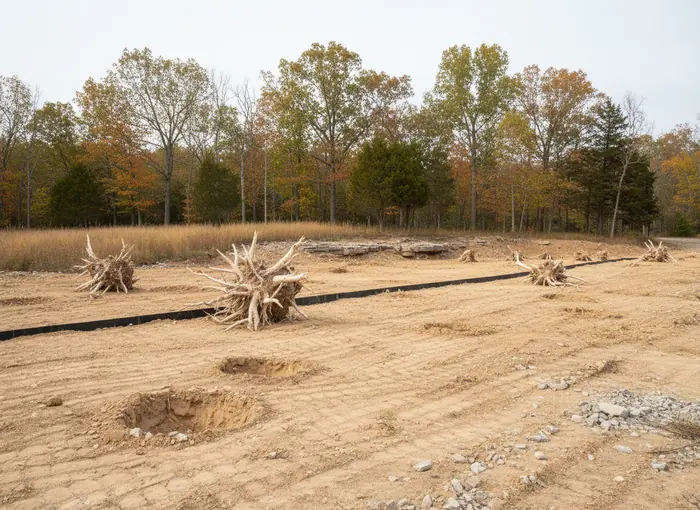
Clearing and Grubbing
Vegetation plus roots, stumps and the root mat, taken out down to competent soil. The highest cost band in the trade and the required scope before footings, utility runs or a septic field. It also leaves the most exposed soil on a site, so the erosion control plan and the stabilisation clock start the same day the machine does.
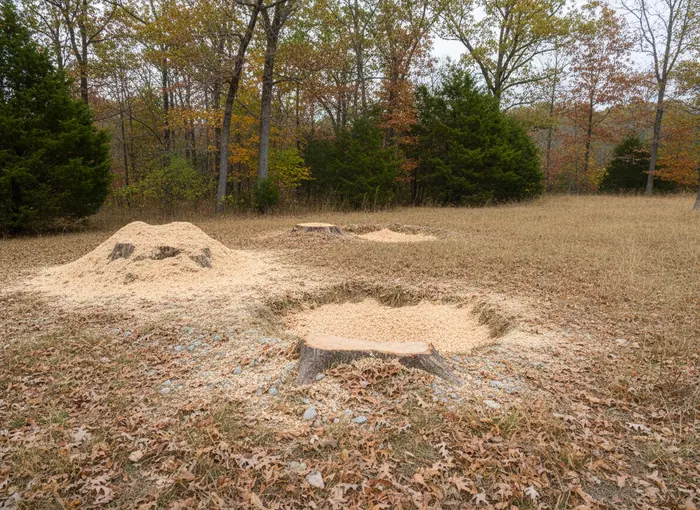
Stump Grinding
Grinding stumps below grade after a removal or a clearing job. The trade quotes per inch of stump diameter with a per-stump minimum, so one lone stump is priced at the minimum and the economics only work when several are ground on one mobilisation. On limestone ground root systems follow solution channels, and grinding depth changes with them.
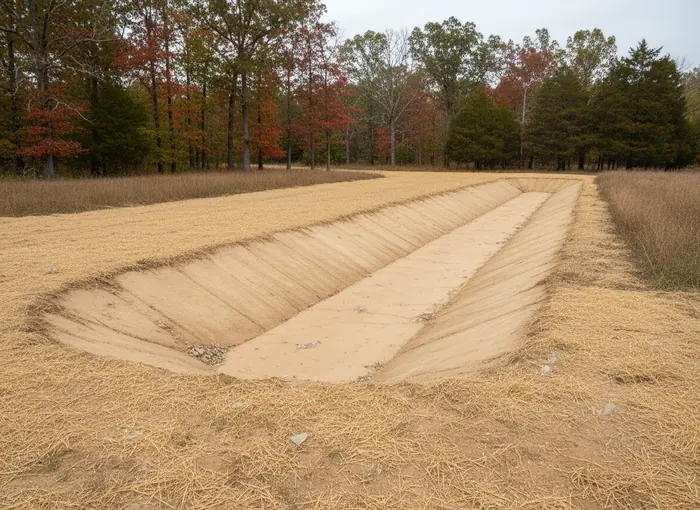
Land Grading
Shaping cleared ground so water leaves the building envelope and stays out of the driveway. Grade alone does not always fix a wet yard here: the Dickson series soil across much of this region carries a fragipan, a dense layer that perches water above it after rain. Knowing that before you cut saves a second visit.
Commercial and Industrial Land Clearing in Clarksville
Commercial work here is real and growing, and the rules that apply to an acreage project are stricter than the ones that apply to a homeowner.
Commercial and Industrial Site Clearing
Montgomery County requires Grading, Drainage and Erosion Control plans on commercial, industrial, assembly and educational projects disturbing more than one acre, submitted before the permit issues. The Guthrie Highway corridor shows the scale involved: a 200-acre, 14-building spec industrial park totalling 2.1 million square feet broke ground there, phase one alone approaching 550,000 square feet.
Right of Way and Utility Corridors
Access roads, power and pipeline corridors and easement maintenance, on an initial pass or a recurring cycle. Corridor work has its own constraints: a narrow working width, a survey line to respect on both sides, and a permitting question the moment a crossing touches a stream or a wetland.
Erosion and Sediment Control
Silt fence, check dams, drainage swales, sediment traps, inlet protection and sediment basins, installed as part of the clearing scope rather than bolted on later. On a permitted site the controls are inspected on a fixed cadence by someone holding the state erosion prevention and sediment control certification.
Subdivision and Multi-Lot Development
Multi-lot residential work carries a fee structure tiered by disturbed acreage rather than charged flat. Divisions creating tracts of five acres or more, with no street or utility built, sit outside Planning Commission review, which is why the rural fringe here is made of five-acre parcels.
The Machines and Methods We Use on Clarksville Ground
Specification matters more than badge. These are the machine classes and methods that decide how a parcel gets cleared, and the limit of each.
Compact Track Loader with a Mulching Head
The workhorse of this trade is a high-flow compact track loader running a drum mulching head. A CAT 299D3 XE Land Management machine paired with a Denis Cimaf DAF-180 head is a documented example of the configuration. Tracks spread the machine weight, and that low ground pressure is why a mulcher can work a wet March field a wheeled machine would rut into uselessness.
Mulching Head Families and Horsepower
Fecon Bull Hog heads come in standard flow and high flow skid steer versions plus the Blackhawk line, with excavator heads matched to carrier classes from 3.5 to 10 ton up through 15 to 45 ton, and tractor power take-off heads rated from 150 horsepower upward. The maker rule of thumb: 70 or more horsepower handles moderate brush and small trees, 100 or more suits heavy-duty clearing.
Excavator, Dozer, Root Rake and Stump Grinder
Grubbing is excavator and dozer work. An excavator with a thumb handles selective removal, root balls, rock and stacking. A root rake separates roots and rock from soil so the soil stays on site. A dozer pushes, piles and does finish grading. A stump grinder handles what is left standing, quoted by diameter. Four machines, four trailers, which is why scope changes move the price so much.
Mulching Against Grubbing, and When Each Applies
Mulching is one pass, no disposal cost and instant erosion cover, but the root system stays alive and it is not a permit exemption, because the threshold is acreage disturbed rather than method used. Grubbing removes the root mat and is mandatory before a footing or a septic field. Selective clearing sits between them: slower per acre, but it keeps the canopy that made the lot worth buying.
Chipping, Hauling and Burning
What happens to the material is a real line item, decided by law as much as by cost. On-site chipping runs by the hour and leaves a usable product. Hauling is priced by the load. Burning is cheapest per hour and by far the most constrained: Tennessee requires a Division of Forestry permit from 15 October through 15 May, valid for the day of the burn only, and vegetation not grown on the property may not be burned at all.
When Montgomery County Landowners Call Us
Written the way the problem shows up on the property, not the way the trade files it.
You Bought Acreage You Cannot Walk
Ground left alone for a few seasons on the Highland Rim closes in fast. Oak and hickory account for close to 70 percent of Tennessee forest land by type group, and the understory that comes up beneath them is briar, honeysuckle and volunteer stems thick enough to hide the back property line. A mulching pass across the understory usually gives the parcel back inside a couple of days.
A Builder Needs the Pad and the Drive Before Concrete
A footing crew needs grubbed ground, stripped and stockpiled topsoil, compacted subgrade and an access road that will carry a loaded concrete truck in whatever weather turns up on pour day. That last item is the one that gets forgotten and the one that stops the job. Most of the rural fringe here is unsewered, so the septic field location settles the clearing plan, not the other way round.
The Fence Line Has Disappeared into the Brush
Fence maintenance stops being possible once the line grows in, and cattle find the gap before you do. A tracked mulcher works a narrow corridor cleanly, but the survey line matters more than the machine: clearing across a boundary is a genuine liability, and where the line follows a creek there is a riparian buffer.
A Storm Put Timber Across the Field
Straight-line wind and tornado damage is a real risk in this part of Middle Tennessee, and the town of Erin took an F3 tornado in 2000. Downed timber, hangers still loaded in the canopy and lifted root plates are three different jobs with three different machines, and only some of that material can legally be burned where it fell.
What Land Clearing Costs in Clarksville, TN
General land clearing in Tennessee: $1,300 to $4,500 per acre
Tennessee figures for 2026 from a published state cost guide, quoted per acre. Density is the primary driver and creates a three to eight times spread on its own, which is why an honest range is wide. No number here is a quote.
| Scope | Typical range | What it covers |
|---|---|---|
| Light brush and grass | $975 to $1,560 per acre | Open or lightly grown ground. Roughly 3 to 5 hours per acre. |
| Medium brush and small trees | $1,430 to $2,210 per acre | Closed understory with stems up to a few inches. Roughly 5 to 8 hours per acre. |
| Heavy forest and large trees | $2,080 to $3,250 per acre | Standing timber. 8 to 10 or more hours per acre, and stems over 6 inches add to it. |
| Forestry mulching | $1,105 to $1,950 per acre | No haul-off line item, because the material stays on site as cover. |
| Clearing and grubbing | $2,600 to $4,160 per acre | Roots and stumps out. The band a builder needs, and the highest of the five. |
What moves the price
- Vegetation density, worth a three to eight times spread between light brush and mixed hardwood.
- Slope. Moderate slopes add roughly 20 to 30 percent, steep or rocky terrain 40 to 60 percent.
- Stem size. Numerous trees over 6 inches in diameter add 15 to 30 percent to a mulching job.
- Access. A parcel a machine cannot reach easily adds roughly $500 to $1,500 in mobilisation.
- Project size. Five acres and up typically earns a volume discount of 10 to 25 percent.
- Permitting. Above one acre the county grading permit and plan review are charged per acre, with a state stormwater fee on top.
A worked example. Four acres of medium brush with scattered stems over 6 inches, on a moderate slope, with a gate the trailer can reach. Mulching at the middle of the Tennessee band puts the cutting near $6,100, and the slope adds around 20 percent, so call it $7,300. At 5 to 8 hours per acre against a machine clearing 1 to 3 acres a day, that is a two to three day job. Because the disturbance exceeds one acre, the county grading permit at $65 per acre and plan review at $50 per acre add roughly $460 plus a $10 archives fee, and state stormwater coverage in the 1 to 5 acre band is $250. Those permit figures come from published county and state fee schedules, not a national average.
How a Clearing Job Runs
Five steps, and the order is not negotiable, because two of them are legal deadlines.
-
Site walk and measurement
We walk the parcel with you, measure the area actually being disturbed, look at slope, access and what is standing, and find the wet ground and any blue-line stream. Disturbed acreage decides which permits apply, so it gets measured rather than read off a plat.
-
Permit and utility locate check
We tell you what the acreage triggers before quoting, not after invoicing. Tennessee 811 needs at least three working days of notice under state law, the marks are good for 15 calendar days, and there is a 24-inch tolerance zone either side of a marked line.
-
Written scope and quote
The scope names the method, the acreage, the debris route, the erosion controls and what the ground will look like when we leave. Line items are separated so a phase can be deferred without unpicking the rest of the job.
-
Clearing and debris handling
Controls go in first where required, then the clearing runs. Material is mulched in place, chipped, hauled or, in the permitted season and only where it grew, burned. The debris decision is priced in the quote rather than appearing at the end.
-
Stabilisation and walkthrough
Exposed ground gets stabilised on the deadline that applies to it, which on a permitted site is a stated number of days rather than an intention. We walk the finished ground with you and say plainly what will grow back and how soon.
How We Work on Montgomery County Ground
The permit question gets answered first
Soil disturbance over one acre in Montgomery County follows the county stormwater regulations and state construction stormwater permitting, and mulching does not change that, because the trigger is acreage disturbed rather than the machine used. Anyone telling you a method removes a permit requirement is describing something not in the rule.
Method chosen against the end use
We ask what the ground is for before quoting a method. Pasture, a build pad, a driveway and a view line are different scopes, and picking the cheap one for a job that needed the expensive one costs more than the difference, because the second machine still comes out.
Free quotes and a written scope
Site walks and quotes cost nothing, and the scope is written in method, acreage and specification rather than adjectives, so you can set it beside another quote and compare on the same terms.
The debris route is priced up front
Mulch in place, chip on site or haul away are three different costs, and burning carries a season, a one-day permit and a rule against burning material that did not grow on the property. That decision goes on the quote.
Land Clearing Across Clarksville and Surrounding Communities
We work Clarksville and Montgomery County first, including the Sango growth wedge east of the city, the Saint Bethlehem and Exit 4 corridor along US 79, and the Rossview area where a 236-unit residential development is planned. Beyond the county line the radius runs to roughly 35 miles.
Each community below has its own page, because the rules genuinely differ here. The state line runs through the area: four communities we serve are in Kentucky, where no Tennessee permit, burn season or locate rule applies. Seven are Tennessee municipalities in Robertson, Cheatham, Stewart and Houston counties, each with its own codes office. Five are unincorporated Montgomery County. Full coverage is on the service areas page.
- Forestry Mulching in Hopkinsville
- Lot Clearing in Springfield
- Site Preparation in Oak Grove
- Land Grading in Ashland City
- Brush Clearing in Pleasant View
- Stump Grinding in Woodlawn
- Clearing and Grubbing in Dover
- Commercial Land Clearing in Southside
- Right of Way Clearing in Guthrie
- Land Clearing for Farming in Erin
- Fence Line Clearing in Pembroke
- Bush Hogging in Adams
- Storm Damage Cleanup in Cumberland City
- Land Clearing for Home Building in Sango
- Selective Clearing in Palmyra
- Gravel Driveway Installation in Cunningham
Land Clearing Questions We Get from Clarksville Property Owners
How much does land clearing cost per acre in Clarksville, TN?
Tennessee bands for 2026 run $975 to $1,560 per acre for light brush, $1,430 to $2,210 for medium brush and small trees, and $2,080 to $3,250 for heavy forest. Mulching sits at $1,105 to $1,950 and grubbing at $2,600 to $4,160. Density is the primary driver, and slope adds 20 to 60 percent.
Do I need a permit to clear land in Clarksville or Montgomery County?
Above one acre of soil disturbance, yes. Montgomery County stormwater regulations apply and Grading, Drainage and Erosion Control plans must be submitted before any earth disturbing activity begins, through county Building and Codes. State construction stormwater coverage applies at the same one-acre threshold, or below it where the work is part of a larger common plan of development. Fees are charged per disturbed acre rather than flat.
What is the difference between forestry mulching and traditional land clearing?
Mulching grinds standing vegetation where it is and leaves the material as ground cover, so there is no burning, no piling and no haul-off cost, and the site has erosion protection the moment the machine leaves. Traditional clearing pushes, piles and removes, which creates a disposal problem but takes the roots. Mulching is not a permit exemption: the threshold is acreage disturbed.
How long does it take to clear an acre?
A mulcher typically clears one to three acres a day. Light brush runs roughly three to five hours per acre, medium brush with small trees five to eight hours, and heavy brush with larger trees eight to ten hours or more. Grubbing is slower again, because the root mat comes out and the material gets handled twice.
What happens to the trees and brush after clearing?
Three routes, and they cost differently. Mulching leaves the material on site as cover and carries no disposal line at all. On-site chipping runs by the hour and leaves a usable product. Hauling is priced per load. Burning is possible in season, but Tennessee prohibits burning most vegetation not grown on the property.
Do I need a burn permit to burn brush in Montgomery County?
From 15 October through 15 May a Tennessee Division of Forestry burn permit is required for debris pile fires, and it is valid for one day only, so it has to be obtained on the day you burn. Permits are free, online or by phone. A firebreak of at least three feet through leaves and five feet through tall grass or brush is required.
Can you clear a lot for a new house build?
Yes, and it is grubbing rather than mulching wherever footings, a driveway or a septic field are going, because live roots under a slab are not fixable later. Rural splits creating tracts of five acres or more without new streets or utilities are exempt from Planning Commission review here, and the county states plainly that those tracts carry no warranty of septic-suitable soils.
Do you grind the stumps and take out the roots too?
Both, but they are different jobs at different prices. Stump grinding is quoted per inch of stump diameter with a per-stump minimum and a lower rate for each additional stump on the same visit, which is why one isolated stump costs what it does. Full grubbing removes the root mat rather than the stump alone, and sits in the highest cost band of any clearing scope in Tennessee.
Book a Site Walk on Your Acreage
Send the parcel details and we will walk the ground, measure the disturbed area, check the stormwater threshold and put a written scope in front of you before any machine is booked.