Commercial Land Clearing in Clarksville, TN
Acreage cleared to a plan set, with the grading and erosion control submittal, the state stormwater notice and the inspection record handled as part of the scope.
Get a Free Land Clearing Quote in Clarksville
Tell us the acreage, the road it fronts and what the ground has to do afterwards. Form requests are answered the same working day, and every quote follows a site walk.
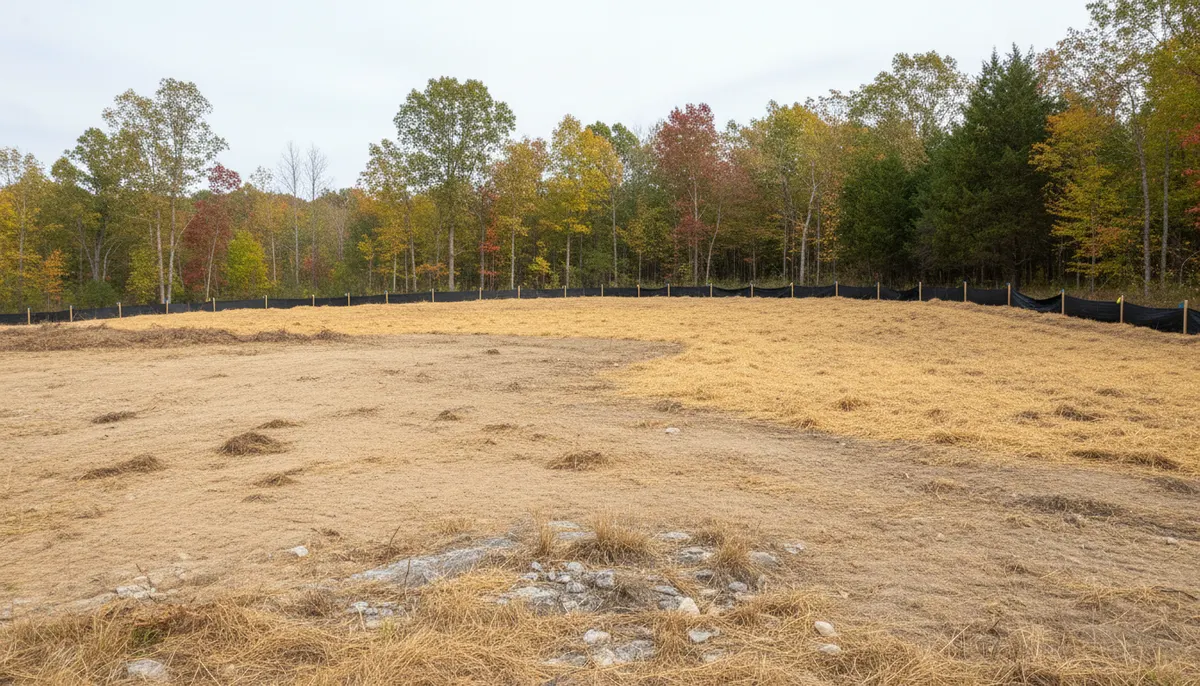
Commercial land clearing in Clarksville, TN is permitted work before it is machine work, and the paperwork sets the start date more often than the weather does. Montgomery County requires Grading, Drainage and Erosion Control plans on commercial, industrial, assembly and educational projects disturbing more than one acre. State stormwater coverage runs on the same trigger.
A 200-acre, fourteen-building spec industrial park totalling 2.1 million square feet broke ground on the Guthrie Highway corridor next to a $3.2 billion LG Chem plant, first phase four buildings approaching 550,000 square feet. At that scale the cut and fill that follows prices off the same take-off.
Commercial Scopes We Quote by the Acre
Industrial and Retail Pad Clearing
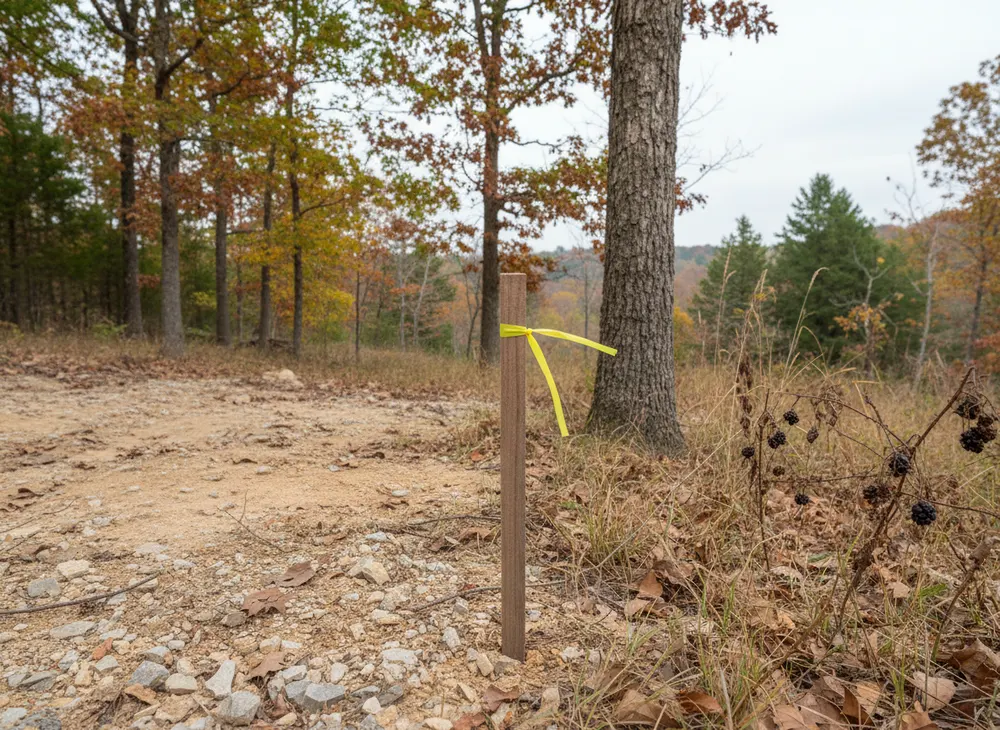
Timber and understory off a defined building envelope, limit of disturbance staked to the plan set, not the property line.
Multi-Lot and Subdivision Work
Phased clearing across a platted development. County land disturbance fees on subdivisions are tiered by acreage, so phasing and fees are one conversation.
Grubbing to Competent Subgrade
Root mat, stumps and organic material removed where slabs, footings, pavement or utilities go.
Erosion and Sediment Control
Perimeter and inlet controls in before the first pass, with the inspection record kept on site.
Plant and Controls on an Acreage Job
Mulching heads for the understory
A high-flow compact track loader with a drum head takes the understory without a debris pile. Fecon Bull Hog heads run in standard-flow and high-flow skid steer versions plus the Blackhawk line, with excavator heads matched to carriers from 3.5 to 10 ton up through 15 to 45 ton, and 70 or more horsepower handles moderate brush against 100 or more for heavy-duty work. Ground in place and left as cover, the disposal line disappears.
Dozer and excavator
Push-and-pile dozer work moves volume fastest on open ground, at the cost of a debris pile and stripped topsoil. An excavator with a thumb handles root balls and rock.
Controls that go in first
The Tennessee construction general permit names the measures directly: silt fences, earth dikes, drainage swales, sediment traps, check dams, subsurface drains, pipe slope drains, level spreaders, storm drain inlet protection, rock outlet protection and temporary or permanent sediment basins.
From Pre-Bid Walk to Permit Closeout
-
Pre-bid walk and acreage take-off
We measure the area actually disturbed rather than the parcel area, because every fee band and permit trigger keys off it.
-
Plan set and notice of intent
Grading, Drainage and Erosion Control plans to county Building and Codes, then the state notice of intent with its stormwater pollution prevention plan.
-
Locates and controls installed
Tennessee 811 requires at least three working days of notice, marks valid for fifteen calendar days. Controls go in before the first machine enters the limit of disturbance.
-
Phased clearing and grubbing
Clearing runs in blocks matching the earthwork sequence. Debris is mulched, chipped or hauled on a route agreed at quote stage.
-
Stabilisation and handover
Exposed areas stabilised on the deadline that applies, inspections logged, records kept on site.
What a Certified Twice-Weekly Inspection Actually Involves
The thirty-day clock starts before the machines do
The most expensive misunderstanding here is treating the permit as a formality running in parallel with mobilisation. Coverage under the Tennessee construction general permit, TNR100000, is triggered by clearing, grading or excavation resulting in one or more acres of disturbance, or by a smaller area forming part of a larger common plan of development. The complete application should be submitted at least thirty days before construction activities commence, with a site-specific stormwater pollution prevention plan developed and submitted alongside the notice of intent. Montgomery County separately requires Grading, Drainage and Erosion Control plans before any earth disturbing activity begins, and on commercial, industrial, assembly and educational projects those plans are a condition of permit issuance. Two authorities, two submittals, one calendar.
Inspection is a certification, a cadence and a record
Montgomery County requires stormwater controls to be inspected by someone holding Tennessee EPSC Level 1 certification at least twice a week, no less than seventy-two hours apart, with an inspection documented immediately before and after a rain event, and a valid plan kept on site. The state permit adds its own: on sites over fifty acres, inspection runs twice per week and follows any rainfall greater than half an inch in twenty-four hours. The seventy-two hour spacing is the part people get wrong: two inspections stacked on a Thursday and a Friday do not satisfy the week. The certification behind it is a course, Fundamentals of Erosion Prevention and Sediment Control, carrying seven professional development hours.
Budgeting a Commercial Clearing Package in Clarksville
Tennessee clearing bands of $975 to $4,160 per acre, plus a permit layer charged per disturbed acre
Published 2026 Tennessee per-acre figures, with county and state fees quoted from the fee documents.
| Scope | Typical range | What it covers |
|---|---|---|
| Light brush and grass | $975 to $1,560 per acre | 3 to 5 hours per acre. |
| Medium brush and small trees | $1,430 to $2,210 per acre | 5 to 8 hours per acre. |
| Heavy forest and large trees | $2,080 to $3,250 per acre | 8 to 10 hours per acre. |
| Clearing and grubbing | $2,600 to $4,160 per acre | To competent subgrade, required under slabs. |
| Permit layer, county | $65 per acre grading permit, $50 per acre plan review, $10 archives fee | Subdivisions run a tiered $250 to $1,000 schedule by acreage. |
| Permit layer, state stormwater | $250 at 1 to 5 acres, $1,000 at 5 to 20, $3,000 at 20 to 50, $6,000 at 50 to 150 | Beyond a year, maintenance fees of $125, $500, $1,000 and $2,000 in the same bands. |
What moves the price
- Disturbed acreage, which sets the clearing quantity and every fee band.
- Vegetation density, worth a three to eight times spread.
- Slope. Moderate adds 20 to 30 percent, steep or rocky 40 to 60 percent.
- Mulching or full grubbing, two cost bands.
- Five acres and up earns a 10 to 25 percent volume discount.
- Programme length, because a year-crossing job picks up maintenance fees.
Twelve acres of medium brush, moderate slope, good haul access. At the middle of the Tennessee medium band the clearing runs near $21,800, and a 15 percent volume discount brings it toward $18,600. The county layer adds $780 at $65 per acre, $600 in plan review at $50 per acre and a $10 archives fee. State coverage in the 5 to 20 acre band is $1,000, plus $500 a year beyond twelve months: roughly $2,390 of permit cost.
What a General Contractor Gets
A take-off for the engineer
Disturbed acreage, limit of disturbance, slope and stream setbacks measured on site, so the plan set and the contract describe the same job.
The permit calendar stated at bid
We name the submittals and lead times before signing, so the schedule is built around the thirty-day notice.
Controls and records as scope
The inspection cadence, documentation and on-site plan are in the quote.
Questions from Developers and Superintendents
Does mulching avoid the land disturbance permit?
No. The trigger in both county and state rules is the acreage of soil disturbance, not the method. A mulched acre is a disturbed acre.
How quickly does exposed ground have to be stabilised?
Temporary or permanent stabilisation is required within two weeks after construction activity in that portion of the site has ceased, tightening to one week on steep slopes.
Is a contractor licence required for clearing work?
A Tennessee contractor licence is required when the total project cost is $25,000 or more. The classification covering this trade is HC-5, worded in the licensing board outline as Clearing, Grubbing, Snagging and Rip Rap. Related classifications cover site and subdivision development, excavation and grading and drainage.
What happens to the cleared material?
Mulching leaves material on site as cover with no disposal line. Chipping runs by the hour, hauling per load. Burning is constrained: state rules prohibit burning building material and construction debris and most vegetation not grown on site, cap a burn at forty-eight hours and no more than twice in thirty days, and require written consent from occupied buildings within a hundred feet.
Can you work around an active site?
Yes, and phasing is usually why the job is priced the way it is. Clearing in blocks keeps exposed acreage low, the stabilisation clock manageable and the limit of disturbance defensible.
Where Commercial Clearing Hands Off
Taking a cleared site to a build-ready pad is the next contract: stripping, cut and fill, compaction.
The sediment control package is quoted separately, with its own schedule and certification.
Digging below the cleared surface starts where clearing stops, and on a sinkhole plain over limestone the ground under a pad needs its own look.
Getting woody material off the property surprises people, because burning is rarely available on a commercial site.
Book a Site Walk on Your Acreage
Send the parcel details and we will walk the ground, measure the disturbed area, check the stormwater threshold and put a written scope in front of you before any machine is booked.