Land Clearing for Farming in Erin, TN
Scrub, cedar and volunteer timber taken back off Houston County ground and returned to hay, pasture and workable field, with the field edges kept honest afterwards.
Get a Free Land Clearing Quote in Clarksville
Tell us the acreage, the road it fronts and what the ground has to do afterwards. Form requests are answered the same working day, and every quote follows a site walk.
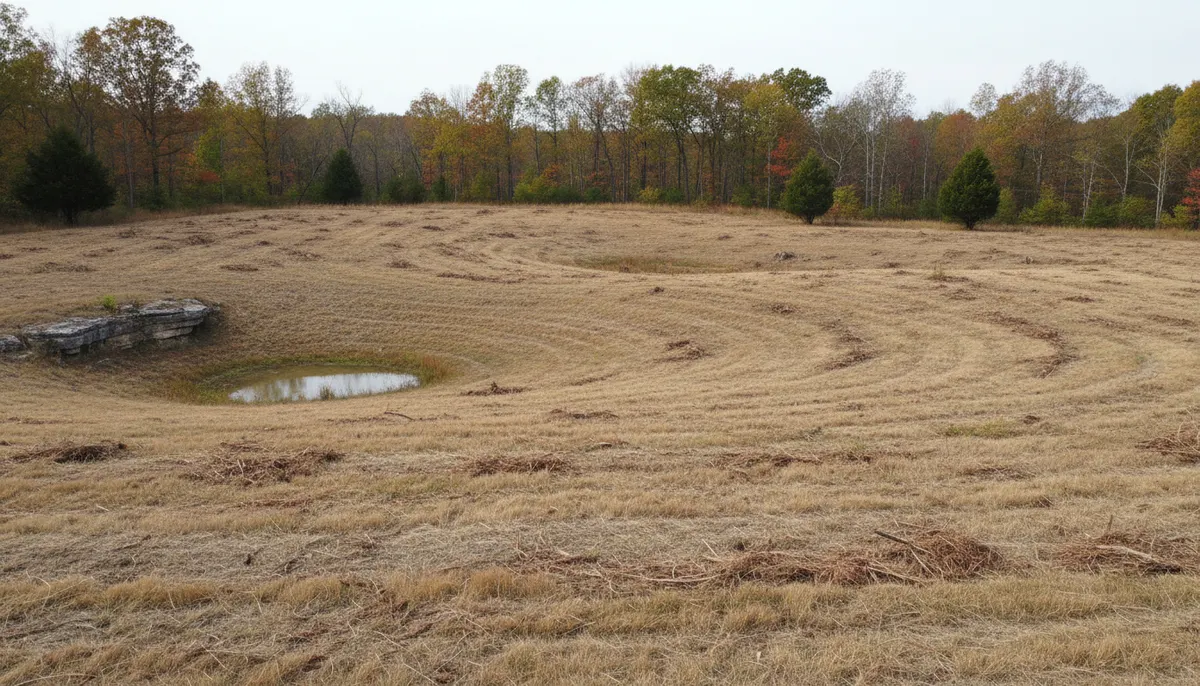
Erin is the seat of Houston County, 1,224 people at the 2020 census, down from 1,324 in 2010, on 4.1 square miles of land at 480 feet with no urban area inside it at all and gently rolling terrain in every direction. A county seat with a shrinking population and no urban area is a farming county seat, and the land clearing question in a place like that is rarely about making room for buildings. It is about reclaiming ground that used to be productive and has spent a decade or two growing something else.
Clarksville Elite Land Clearing does that reclamation work around Erin. Land clearing for farming is a different specification from clearing for construction: the objective is a field that can be mown, grazed or drilled, so the surface has to be even enough for equipment and clean enough for tyres, while the root systems that would matter under a slab often do not matter under grass. That is why the honest answer here is frequently a mulching pass rather than full excavation, and why the same crew that opens a field usually ends up on the boundary fences as well.
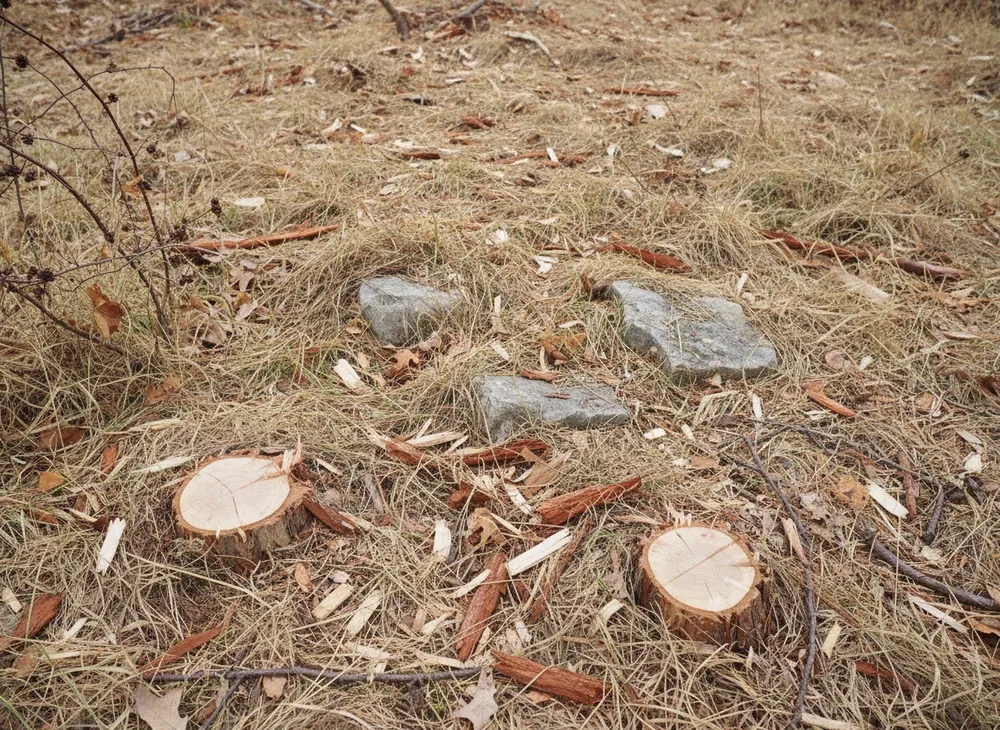
What Takes Erin Fields Back
Three things decide how much work a reclaimed field near Erin actually is.
The species that colonise an idle field
Tennessee forest land runs to 13,833,461 acres, and the oak and hickory type group is 69.7 percent of it. What matters on a field edge is not the volume table but the stem count table, where red maple leads at 9.6 percent, yellow-poplar at 6.9 and sweetgum at 5.6. Those are the species that come first onto ground nobody is mowing, thick and multi-stemmed rather than tall, and they are why a field abandoned for fifteen years is a harder job than one abandoned for five. Eighty-three percent of Tennessee forest land is privately owned, so this is a landowner problem rather than a public-land one.
A fragipan under the pasture
Dickson silt loam, the Tennessee state soil, carries a fragipan, a dense restrictive subsoil layer that perches water above it after rain rather than letting it drain through. On rolling ground that produces wet spots in the low parts of a field long after the high ground has dried. Precipitation runs near 51 inches a year with March through May totalling 14.60 inches and May the wettest month at 5.72, while August at 2.95 and September at 3.49 are the driest. Reclaiming pasture in spring means low-ground-pressure tracked equipment and a slower rate. Late summer into early autumn is when heavy work on this ground is cheapest and least damaging.
Storm timber and the shape of the county
Erin took an F3 tornado in 2000, and storm history matters in farm clearing because wind-thrown timber does not fall in the field, it falls along the wooded edges where the field meets the treeline. That leaves leaning stems, hung timber and root plates tipped out of the ground, which are all hand or grapple work rather than mulcher work, and they are the part of a reclamation job that gets underestimated. The county is entirely rural with gently rolling terrain, so most fields here have more edge relative to their area than a flat parcel would, and edge is where the cost sits.
Farm Clearing Rules That Apply Around Erin, TN
Erin is in Houston County, and Montgomery County numbers do not apply on this side of the line. Below is what holds statewide, stated plainly, and what is local, described without a number we have not verified. Checked 30 July 2026.
Acreage still counts on a farm
The Tennessee construction stormwater general permit TNR100000 covers clearing, grading or excavation producing an area of disturbance of one or more acres, and smaller areas that are part of a larger common plan. Notice of intent goes in on form CN-0940 at least 30 days before work starts, with a site-specific stormwater pollution prevention plan submitted alongside it, and the initial fee at 1 to 5 acres is $250. Field reclamation on farm ground routinely exceeds an acre. We check whether a given job triggers coverage rather than assuming farm work sits outside the permit, because whether an agricultural exemption applies is not something we will state without confirming it for your job.
Water, wet ground and the farm fee
Any alteration to a stream, river, lake or wetland needs a TDEC Aquatic Resource Alteration Permit or a Section 401 water quality certification under the Tennessee Water Quality Control Act. Triggering activities include excavation, bank sloping and stabilisation, channel relocation, water diversions, road and utility crossings and flooding, excavating, draining or filling a wetland. That last one is the live risk in pasture reclamation, because a wet field corner can be a wetland. The fee schedule is friendlier here than most people expect: $50 for a personal residence or family farm on both the individual and general permit tracks. General permits typically take three to four weeks and individual permits are processed within 90 days.
Burning, locates and the county step
From 15 October to 15 May a Tennessee Division of Forestry burn permit is required for debris pile fires, obtained on the day of the burn, with a firebreak of at least 3 feet through leaves or short grass and 5 feet through tall grass or brush, and neighbours notified two days in advance for burns on wooded land. Leaves, branches, limbs, woody vegetation and untreated wood may be burned. Construction debris, treated wood and most vegetation not grown on site may not. Tennessee 811 notice is at least three working days under Tennessee Code 65-31-101. Houston County then applies its own local requirements for grading and land disturbance, and we confirm those with the county for your parcel rather than quoting a figure from somewhere else.
Sources for the requirements above:
- TDEC construction general permit TNR100000, for coverage, notice of intent and fee (https://www.tn.gov/environment/permit-permits/water-permits1/npdes-permits1/npdes-stormwater-permitting-program/npdes-stormwater-construction-permit.html)
- TDEC Aquatic Resource Alteration Permit, for triggers, fees and processing times (https://www.tn.gov/environment/permits/water/aquatic-resource-alteration-permit--arap-.html)
- State and federal wetland regulation in Tennessee, for the statutory basis (https://www.tn.gov/environment/program-areas/wr-water-resources/watershed-stewardship/wetlands/state-and-federal-wetland-regulations.html)
- Tennessee Division of Forestry burn permits, for the season, firebreaks and neighbour notice (https://www.tn.gov/tnwildlandfire/prevention/safe-debris-burning/permits.html)
- TDEC open burning rules, for what may and may not be burned (https://www.tn.gov/environment/air/open-burning.html)
Where We Work Around Erin
The town covers 4.1 square miles inside the 37061 ZIP, and the farm ground we are called to sits outside it on the three state routes that meet here. SR 13 runs north and south, SR 49 comes through town as Main Street, and SR 149 heads off toward the Cumberland. Those routes are how a float reaches a field, and on Houston County farms the last quarter mile off the pavement is usually the part that decides whether the job runs on schedule.
Erin calls itself Irish Town Tennessee and the Shamrock City, and the March Irish festival has run each year from 1962 onward, which is a useful reminder that the calendar here belongs to the community before it belongs to a contractor. Field work booked around a festival week or a hay cut is a shorter conversation than one that ignores both.
The county is recorded as entirely rural, and the practical effect on a clearing quote is uniformity: almost every job here is a farm job, on rolling ground, reached through a gate. What varies is how long the ground has been idle. A field out of production five years is a mowing and mulching job. One out of production twenty years has stems that need a cutting head and root plates along the edges that need a grapple, and it costs accordingly. Where an owner wants the field opened but the good timber left standing, that is selective clearing rather than a clean sweep, and it is worth saying so before the first pass.
North of here the ground runs to Stewart County and the Cumberland, and the grubbing work over that way is set out under clearing and grubbing at Dover.
Land Clearing Services Available in Erin
The four scopes Houston County landowners ask for most.
Land Clearing for Farming
Idle ground returned to hay, pasture or workable field, with the surface left even enough for a mower and clean enough for equipment tyres.
Bush Hogging
Once a field is open, keeping it open is a cutting job on a cycle rather than a clearing job. Cheaper every year than letting it close and starting again.
Fence Line Clearing
Boundary and cross-fence corridors cut wide enough to work the fence from both sides, with locates in before any post hole goes down.
Brush Clearing
Multi-stemmed scrub, briar and volunteer growth taken off without disturbing the soil profile, which on pasture is usually the point.
How We Work in Erin
-
Walk the field, then walk the edge
The open ground takes ten minutes. The treeline, the wet corners and the storm-thrown timber along the boundary are where the real scope is, so that is where the time goes.
-
Settle water and permits before the date
Disturbed acreage against the state permit, any wet corner checked against the alteration permit, the 811 ticket placed, and the Houston County step confirmed rather than assumed.
-
Clear, then set the cycle
The first pass on ground that has been idle for years is the expensive one. We finish with a realistic interval for keeping it open rather than a promise made before regrowth is seen.
Nearby Communities We Serve
Clearing and grubbing at Dover is the Stewart County seat north of here on the Cumberland, where root removal rather than pasture reclamation is the usual ask.
Storm damage cleanup in Cumberland City covers the river ground northeast, in Stewart County under the fossil plant stacks.
Selective clearing at Palmyra is the first Montgomery County ground northeast on SR 149, where the county permit schedule takes over.
Stump grinding around Woodlawn is the US 79 corridor north of the Houston County line, on the same rolling Highland Rim ground.
Book a Site Walk on Your Acreage
Send the parcel details and we will walk the ground, measure the disturbed area, check the stormwater threshold and put a written scope in front of you before any machine is booked.